

Decision guide · reviewed on 8 October 2026
Northern lights in Iceland: when to see them and what affects them.
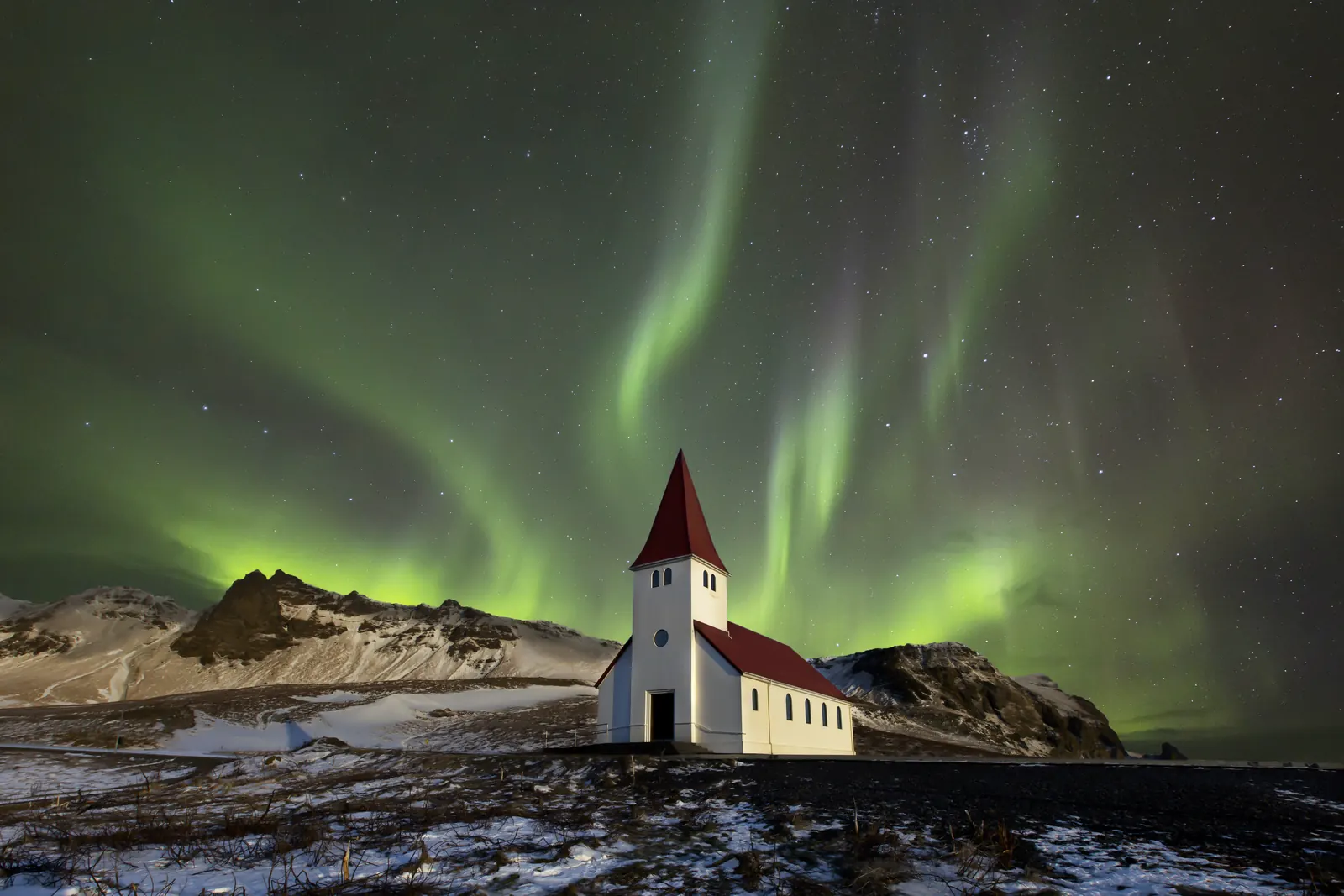
Nobody guarantees the display. The IMO says the aurora needs a dark, partly clear sky. The forecast combines a cloud map (white = clear, green = cloudy) with midnight activity on a 0-to-9 scale. Even low activity (2) can be beautiful; 3 can be dazzling. Moonlight reduces visibility a little but can outline the landscape; clouds often hide the lights completely. Summer is too bright.
| Factor | What the official source helps you see | What to do |
|---|---|---|
| Darkness | Daylight hides the aurora (sunset and darkness on the IMO for Reykjavík). | Autumn to early spring; not peak summer. |
| Clouds | The cover map matters more than a high index. | Leave a spare night so you can move the outing. |
| Activity | Scale 0–9; high values are rare. | Do not book a single day “because the index is high”. |
| Itinerary | Storms and roads are part of winter. | Few bases; check the IMO forecast. |
Who this trip is for — and who it is not
The aurora in Iceland is for anyone who accepts darkness, clouds and a plan B. September to March is usually the useful window; summer is too bright. Six nights in Reykjavík and two on the south coast, with a day without a long drive, respect the sky better than the full ring in the dark.
It is not for anyone who needs a guarantee. It is not for anyone who wants the summer ring and the aurora in the same short week. Compare with Lapland if the reason is family and Santa, not an Icelandic sky.
Planning example (not a package): six nights based in Reykjavík and two on the south coast, with a day without long kilometres. If the sky closes, you move the outing, not the hotel every night.
What should appear in the proposal
- A month with enough darkness (as a rule September to March; summer is too bright).
- Bases: few, with nights in the same place — not a rushed ring.
- Car or transfers, and a spare day if the sky closes.
- Whether you accept not seeing the aurora: the IMO combines clouds and activity; nobody guarantees the display.
- Whether the island ring belongs on this trip or waits for summer.
Frequently asked questions
What is the best month for the aurora?
The one with enough darkness and some slack in the calendar. September to March is usually the useful window; your week’s clouds matter more than the month’s name.
Can I do the ring in winter and look for the aurora?
The full winter ring needs time and flexibility. For aurora, less road and more nights in the same place usually works better.
Is the aurora guaranteed if the index is high?
No. High values are rare and clouds hide the sky. The cover map matters more than the number.
Does summer work for the aurora?
No. Summer is too bright. Daylight hides the display. Autumn to early spring is the darkness window.
Is Reykjavík enough as a base?
For a first aurora trip, yes, with a second base on the south coast or Snæfellsnes and a spare day. You do not need the ring to look at the sky.
Can't find the trip you're looking for? Request a quote for any destination, departing from wherever you like. You can also check the offers catalogue.
Sources: IMO — aurora, IMO — reading the forecast, Visit Iceland.